
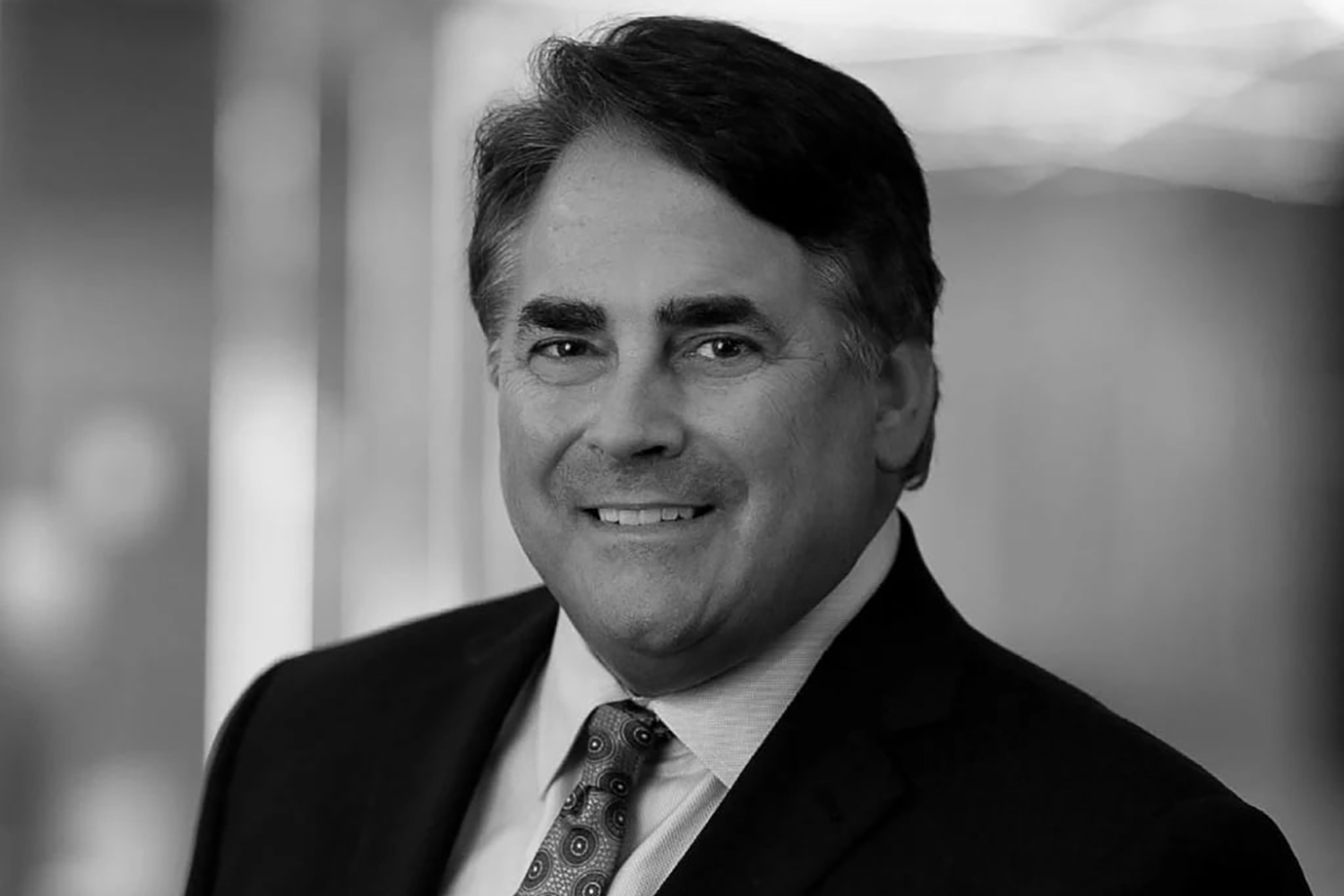
Edward Buthusiem, CLA '82, establishes a highly selective College of Liberal Arts faculty research award of $50,000.
D
ata-driven decision-making is more than a tech buzzword, especially to Edward Buthusiem, CLA '82. As a partner at Berkeley Research Group and an expert witness in the pharmaceutical industry, he roots his work in data and truly understands the power of numbers. This bedrock is why he chooses to support areas where people use research to solve societal problems such as crime and violence in Philadelphia. "We need to focus on the root cause of violence in our community and put trust in research initiatives to advance the dialogue of curbing violence," says Buthusiem.
Beyond his financial support, Buthusiem also taught as an adjunct professor at the Temple Beasley School of Law and has been a member of the CLA Board of Visitors since 2005, which he chaired for several years. He's a strong advocate of the quality of education and research provided at the College of Liberal Arts, and this sparked his interest in Criminal Justice Professor Caterina Roman's applied research in complex crime, criminal justice issues and program evaluation.
Caterina Roman brought her neighborhood health background to the Temple faculty in 2008 and has since built a large portfolio of grant-funded studies and evaluation projects. Her research informs government, community and school-based crime prevention and reduction agencies in areas including violence prevention, street gang intervention, victim services, parole and prison reentry. These agencies often come to Roman for support because they may not have the capacity to find, implement and assess evidence-based solutions internally. However, through research partnerships, evaluation and feedback Roman assists key programs in increasing their effectiveness, accessibility and reach to improve public safety for our communities. Roman also testifies in front of City Council by offering her firsthand knowledge from participating in this work, not just from combing through the data.
"We are doing the work and learning from agencies, just as they are learning from us. We are more than just churning out numbers. We are working to make data more accessible to everyone, especially the community, groups trying to affect change, government agencies trying to be more efficient, and students learning why data is important," said Roman.
Each year $10,000 will be awarded to a faculty member advancing society by informing public policy through applied research or enhancing societal knowledge on a national scale. Caterina Roman, who researches and evaluates crime policy and prevention initiatives, is the inaugural recipient. Her work informs neighborhood and government organizations to develop or expand programs to drive real-world change in evidence-based ways.
Roman works tirelessly to uncover hard-to-access cross-systems data and investigate research questions that haven't been asked or applied to what's happening on the streets. For example, how does crime perception and fear affect how we use our public spaces and get exercise? What are the barriers to care for victims of violence? And, because it's difficult to stop kids from joining gangs, how do we get them out? Roman also recently finished a project providing feedback to government agencies during long-term high-profile drug investigations to measure and decrease drug trafficking's effects on gun violence.
In an effort to help advance projects like this, Buthusiem established a one-of-a-kind faculty award of $50,000 to the College of Liberal Arts. Each year $10,000 will be awarded to a faculty member advancing society by informing public policy through applied research or enhancing societal knowledge on a national scale. As the inaugural recipient, Caterina Roman had this to say: "I'm honored that Ed values the research we do because it is focused on improving our world and what we see in our every day."
Buthusiem's gift will help amplify Roman's research and gather graduate student assistance to bolster projects, disseminate results to communities and enhance their ability to conduct research relevant to the health of everyday Americans. This gift also opens the door to more multidisciplinary partnerships to drive long-term change toward Philadelphia public safety.
"Temple sits in a geographic area that typically has not had a lot of resources. Many of those neighborhoods lack affordable housing and have few safe places for children to play, poor housing stock and deteriorating public schools. These issues are all entwined with violence. This award will allow us to work systematically and find partners at Temple working in these areas so we can support each other and make a greater impact overall," says Roman.
Temple is proud to have a community of alumni, donors and friends working in tandem as we spearhead cutting-edge research to solve society's greatest challenges. "We need to be the engine of change. Temple has always been open and willing to work with alumni in a collaborative spirit. As alumni, we have a very important role in supporting and enhancing Temple's mission," says Buthusiem.
Interested in making a gift to Temple? Learn more about giving back to Temple.