
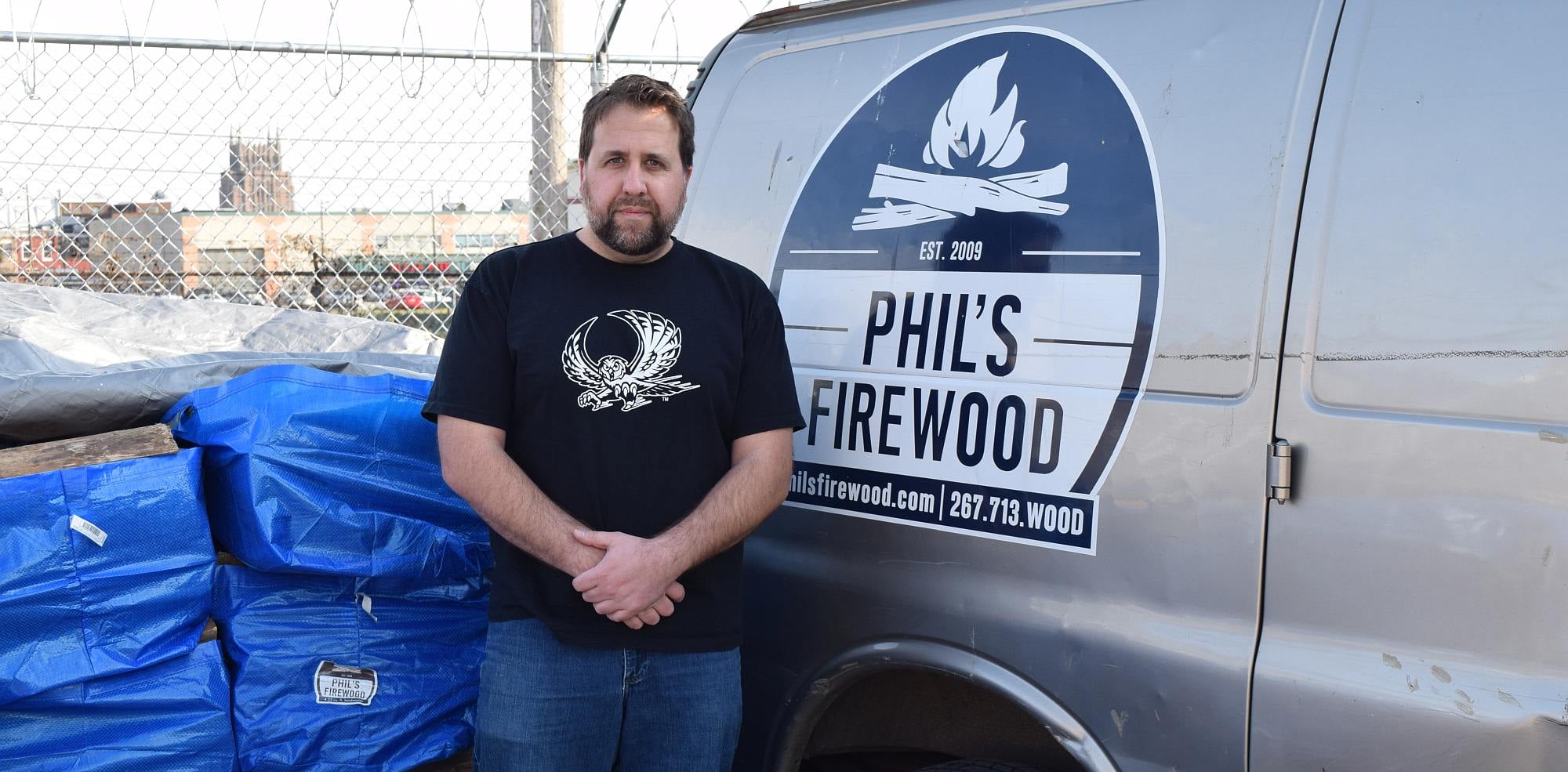
Phil Stoltzfus (FOX '04) never planned on getting into the firewood business — especially in an urban city like Philadelphia. However, a unique opportunity and some scrappy entrepreneurial spirit led this alumnus to create a new business, with a little help from his childhood upbringing in Lancaster County.

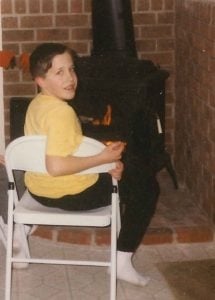
At 11 years old, Phil Stoltzfus's dad left the comfort of city life for a 20-acre tract of farmland in Lancaster County. Phil became no stranger to hard work as he labored to clear the land of dead trees and brush as part of his daily chores. Much of this debris was burned, and when his father installed a small parlor stove in their kitchen to stave off the cold winter months, Phil's lifelong affinity for the comfort and warmth that only a fire can provide began. Combined with the daring and entrepreneurial frame of mind that Temple encourages, Phil Stoltzfus, FOX '04, was inspired to start Phil's Firewood in 2009.
Today, when people think of urban living, fireplaces and wood stoves aren't usually the first things that come to mind. The comfort of a cheery blaze is thought of as something reserved for summer camping trips or nostalgic memories of grandma's house, rather than the bundled together rowhomes found throughout Philadelphia. Buoyed by remembrances of the woodfired stove that kept him warm during his younger years, Phil set out to fill a void and ensure that every Philadelphian has access to quality wood so that they too can enjoy the crackle and pop of an evening fire.
We caught up with Phil and talked about the origins of his business, what makes the best wood for a fire and what to expect if you decide to go old-school and install a wood burning stove in your home.
Are you from the Philadelphia area? PS: No, I'm from Lancaster County originally. I grew up on a small 20-acre farm outside the town of Manheim. I actually came to Philadelphia to go to Temple in 2000. While I was here, I got my bachelor's degree in business administration with a concentration in marketing.
So I assume that your original plan wasn't necessarily to get into the firewood business?
PS: [Laughs] Not really. I grew up with a wood stove in my house in Lancaster and I missed having one, so soon after I graduated I put a wood stove in my row house in the Olde Richmond area of Northeast Philly. It was actually my uncle's stove that I grew up with. I started trying to get firewood delivered and came up against what a challenge that is. The problem was, I couldn't find good wood in the city. You just never knew what you were going to get.
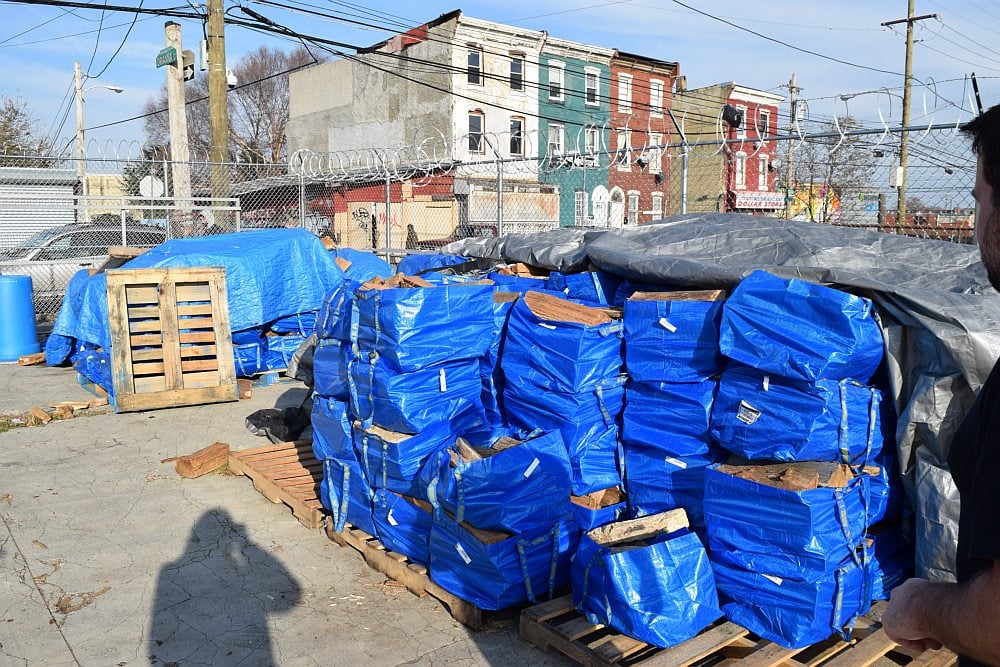
Most places would only deliver large amounts of wood, but the majority of people in Philadelphia buying firewood don't need an entire cord or even a half cord of the stuff. These are folks with fireplaces, a few with wood stoves here and there, and then most recently with the pandemic, small fire pits became really popular.
I'm an entrepreneurial person by nature, and saw an opportunity to offer packaged firewood delivery so I started the business, kind of as a hobby. I guess it still is because I do have a 9-5 job. My customers were mostly residential at first, but I eventually expanded into restaurants that use wood fired stoves.
I wouldn't know where to begin to look for firewood. Can you tell us where you source your wood from? Is it various places or do you have one person or supplier that is the absolute best?
PS: I always try to have a handful of reliable suppliers. I never want to just rely on one or. So, I started out with a guy in Bucks County who does tree work, but my business outgrew his supply. I've tried a few different people over the years and right now I have a really good supplier out of Lebanon county. He's a guy that does land clearing. So I'm getting all my air dried wood and most of my kiln firewood from him right now.
What is the difference between air dried and kiln dried wood?
PS: The difference comes down to the method of seasoning. Air dried wood is what most people sell. The logs are cut to a specific size, split and then you basically pile it up and wait for the moisture to evaporate from it naturally. Split, unseasoned firewood typically takes six to 12 months to dry this way.
Kiln dried is your more premium firewood. It's a lot harder to get small quantities of it delivered because of the lack of suppliers in this area. A lot of kiln dried firewood in Philadelphia comes from other parts of the state, or even like other states, like New York. They basically put the firewood pieces into a large industrial oven, and they bake it, so in a matter of hours all the moisture evaporates. It also kills all the bugs that might be living in the wood and that's important for restaurants and people who are storing the wood indoors.
"There's more of a hunger amongst Temple grads to innovate and just find solutions for problems that exist in the world. That's what I'm doing with my day job, and that's why I started my firewood business. You can always find a way to fill a need or make the world better, even if it is on a small scale."
Is there a wood of choice or variety of tree you look for when you're looking for good firewood? PS: The key thing for firewood is density. Hardwoods are best, because the harder the wood, the longer it will burn, and the more heat output you get from it. The hardest woods in our region are oak and locust. A lot of meat smokers insist on oak for flavor. From there it kind of goes down a little bit and you have your cherry and maple. Fruit wood like cherry and apple give off a nice aroma, we sell a lot of cherry around the holidays. Maple's a little bit softer, but it's still pretty good. Then you get down to poplar and pine, which are both much softer and burn much more quickly. I don't recommend people use soft woods for fires.
Interesting. So, if I wanted to put a wood burning stove in my house, what would I need to do?
PS: I can tell you my own experience. I let my homeowner's insurance know what I wanted to do, and they were fine with me putting the stove in. I also had my old chimney checked to make sure it's structurally sound since it had not been used in a while. Also, there can't be anything else running in your chimney. A lot of Philadelphia homes have their water heater exhaust or furnace exhaust running through there, and you can't have that if you are installing a stove. Once you are sure about all of that, you have to add a liner made of a special grade of metal that can withstand the heat produced by the fire.
That's the chimney, but there's also the floor beneath the stove. That needs to be able to withstand a large amount of heat as well. They make different products for that, but I like brick, so I used brick for mine. I laid down brick on the floor, ran the stove pipe up into the chimney and we were good to go! For eight years, that was our only heat source. It was nice, but a lot of work to tend the fire.
Speaking of work, you mentioned that this was not your full time job. What else do you do for work?
PS: People always get a kick out of this. I'm in healthcare marketing. I worked at Penn Medicine for 12 years, jumped over to Virtua Health in South Jersey for two years and I just started a new position with a start-up company in bioinformatics called United Patient Network. We're working to bridge the research and development gap between biopharmaceutical companies and health systems by creating a genomics-based ecosystem of shared data, with the goal of advancing the field of precision medicine and contributing more to more personalized treatment plans, including new therapies tailored to the individual. The company was launched in December 2021. We have two health systems signed up and a third on the way. It's very exciting.
That's incredible. Your two jobs are so different and yet you are clearly passionate about both. Do you feel like your time at Temple helped get you to where you are now?
PS: Yes, absolutely. Like a lot of Temple alums out there, I'm entrepreneurial by nature. Most of us weren't born with a silver spoon in our mouths. You know what I mean? But I think I'm better off for it. There's more of a hunger amongst Temple grads to innovate and just find solutions for problems that exist in the world. That's what I'm doing with my day job, and that's why I started my firewood business. You can always find a way to fill a need or make the world better, even if it is on a small scale.
Phil's Firewood delivers quality packaged firewood to residences and businesses around the Philadelphia area. To learn more, visit philsfirewood.com