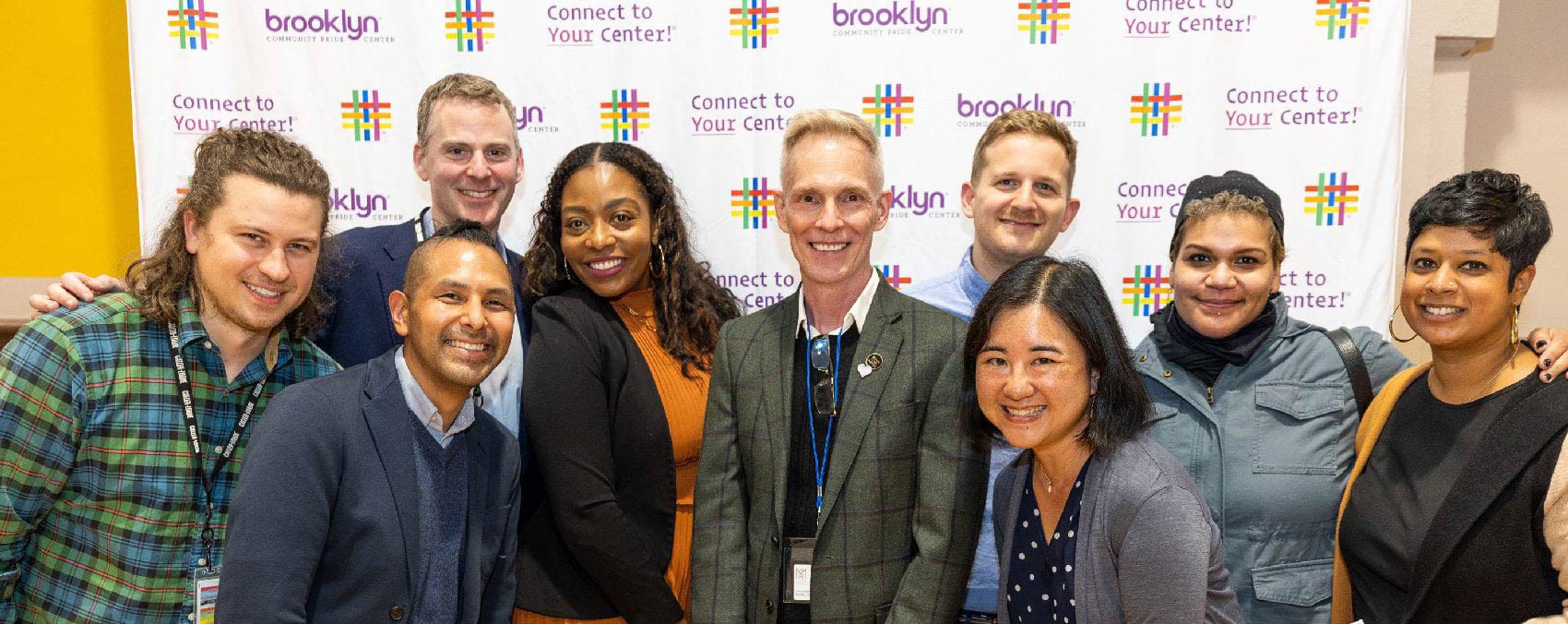
Brooklyn, with the population of a large city, has a large and growing LGBTQI+ community and for a long time many of them found themselves traveling into Manhattan for wellness services and community interaction. After 10 years with one center, Rumohr, now CEO, has now opened a second location in Crown Heights.
Every community needs a place to call their own. To gather together with like-minded individuals. To make plans for the future, both great and small. To feel safe, seen and understood. Prior to 2009, many members of the LGBTQI+ community residing in Brooklyn had to make the trek to Manhattan in order to attend community groups and obtain vital health services at the community center located there. If Brooklyn were a city, it would be the fourth largest in the entire country, and many wondered why they could not avail themselves of similar opportunities afforded to their Manhattan counterparts closer to home. After long discussions with city officials, financing was granted, and the Brooklyn Community Pride Center was born. Today, LGBTQI+ individuals and their allies in Brooklyn have access to a wealth of programs designed to foster meaningful relationships, improve mental and physical wellness, advocate for greater equality and much, much more. Since its inception Brooklyn Community Pride Center has grown by leaps and bounds, and opened its second location in Crown Heights in November. We sat down with the CEO of the center, Floyd Rumohr, TFMA '88, to discuss his time at Temple and the challenging but necessary path to creating a warm, welcoming space for the LGBTQI+ community in Brooklyn.
Q&A
Answers have been condensed for clarity and conciseness.
Can you tell us a little bit about your path to Temple?
FR: I'm originally from Detroit, Michigan. I did my undergraduate work at Wayne State and then my graduate work at Temple. I knew I wanted to go to Temple, but I was a low-income kid, so I applied for a fellowship. It wasn't for artists or anything; it was available to anyone attending Temple, so I thought it was a long shot. To my surprise I ended up getting it and I was told at that time that I was the first MFA from the graduate theater program ever to receive a universitywide fellowship. I am extremely grateful for that.
What did you do after graduation?
I initially intended on moving to Los Angeles to focus on acting in film but when Temple did a showcase for agents in New York City, I was lucky enough to get noticed and ended up staying on the East Coast.
I had some minor successes as an actor, but honestly, the poverty was unendurable. There was also a ton of competition, so I subsidized my income by working as a teaching artist for theater in the public school system.
That's where I started to get interested in nonprofit development and social activism, and around 1994 I founded my own company, Stages of Learning, which focused on training actors to go into the schools to be de facto drama teachers. It was great to help people like me who struggled to break into acting, and the program did quite well for a time until it was eventually merged with another nonprofit organization.
After that I got into management consulting and executive leadership, and then joined Brooklyn Community Pride Center in 2016 as CEO, which is where I have been ever since!
Tell us a little bit about how Brooklyn Community Pride Center was established.
Sure. In 2008, elected officials like former Brooklyn borough president Marty Markowitz and New York City Council Speaker of the House Christine Quinn, as well as a bunch of community members, were scratching their heads and saying, "We have a sizable LGBTQI+ population in Brooklyn, many of them identifying as BIPOC, and they don't want to travel into Manhattan for wellness services or community interaction." This led to the obvious question of why there wasn't an LGBTQI+ community center here in Brooklyn, given that it's the fourth largest community in the country. It just made sense.
"Forging bonds, creating connections, fostering new relationships…. This is why our organization exists."
At that point we were allowed to move forward, with city council members and the Brooklyn Borough President pledging $2 million to lease our original building and establish the center. The release of the funds was contingent upon finding a permanent home. Flash forward about 10 years and here we are, ready to open a second branch in Crown Heights, which will be our new headquarters.
That sounds like a huge endeavor. What was your biggest obstacle that you needed to overcome when you were starting out?
Our biggest challenge? It really depends on when you ask me. Dealing with developers can be difficult. Money is often tight. And since we will never be one-size-fits-all, deciding on programming can be hard, especially when we serve so many people, many of whom have radically different opinions on what we should focus on. Today, I would say our biggest obstacle is finding the resources to serve such a large and growing community when many folks don't know we exist.
Can you talk a little bit about some of the programmatic elements that take place at the center?
Well, the organization is fast becoming the leading network of programs and services for the LGBTQI+ community in Brooklyn. Over the next few years we'll concentrate our resources around workforce development, racial justice and health and wellness. So, it's going to look a lot like it does now, but hopefully more of it!
For example, at our original site in Restoration Plaza, the G.H.O.S.T. Project distributes hot meals, PPE and winter clothing to the community every Wednesday without fail. BIPOC, transgender folks and all sorts of other people come in and they take over the whole Restoration Plaza site, feeding the community and engaging in activities. The impact they have made is absolutely incredible.
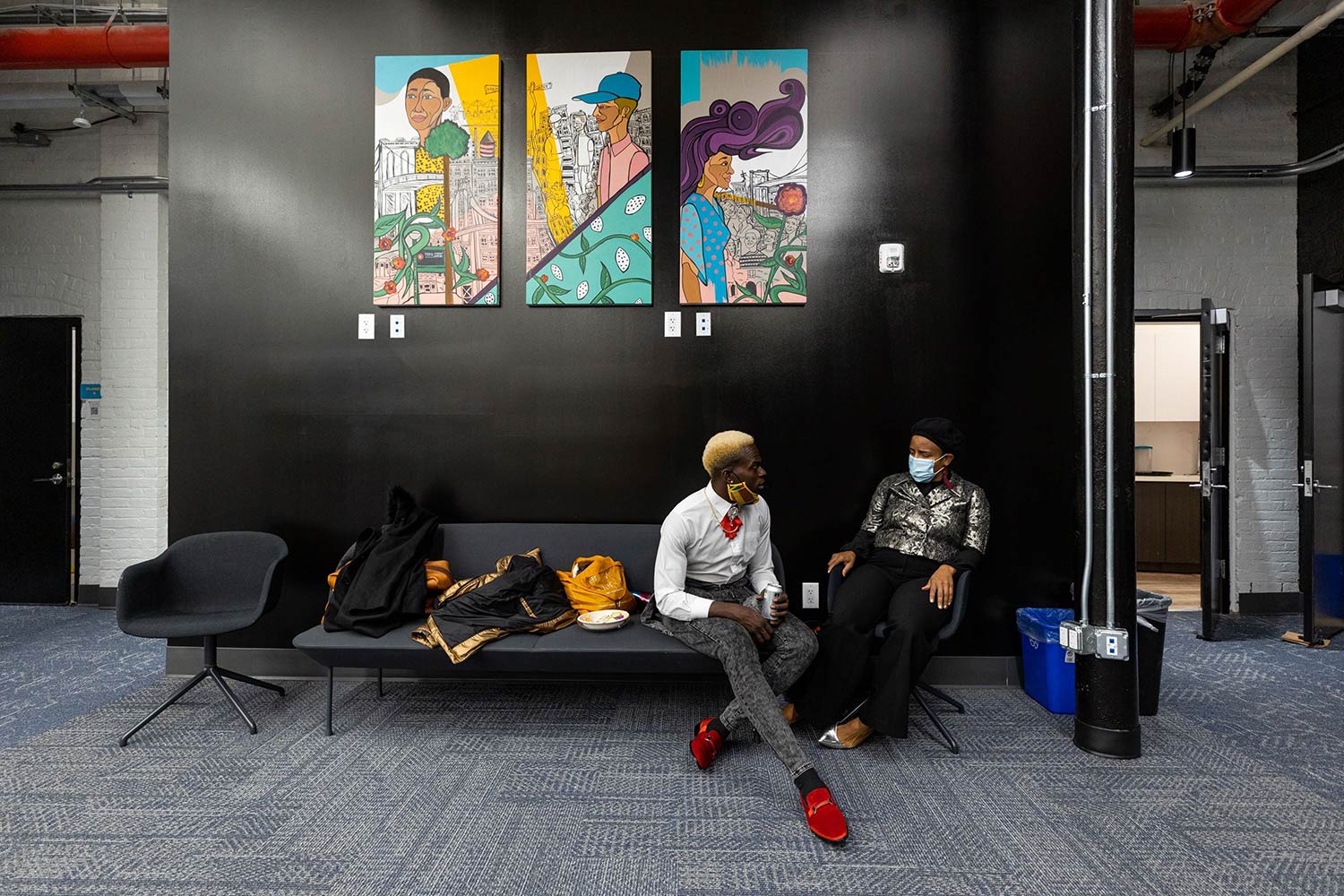
Our new site in Crown Heights is adopting a WeWork style model where people can grab space to do work and use our state-of-the-art technology to do whatever they need to do: plan a business, strategize around activism, etc.
You touched on health and wellness as they pertain to the LGBTQI+ community. How are you addressing the needs of your community with respect to issues like social isolation and physical well-being?
Social connection is really what a community center is there for. Creating community spaces is our driving purpose. The pandemic has exacerbated social isolation immensely, and we've seen a huge increase in depression and anxiety among members of our community, making our work more important than ever. Forging bonds, creating connections, fostering new relationships…. This is why our organization exists.
Going even further, we are opening a mental health practice in our new facility by partnering with Callen-Lorde Community Health Center to provide therapy. We also plan to build on existing fitness programs, adding organized sports for people who have traditionally been left out of team athletics. We're going to have to look at the greater issue and purpose of team sports and the nature of competition. How do you create sports teams in a nonbinary world where you have fluid genders? I think this is going to get us into the societal discussion around the nature of competition and sport.
Why are community spaces like the Center crucial to the health of LGBTQI+ groups?
Bottom line, because hatred and bigotry is not going away. Kids are still being put out of their homes because of their identities. Members of the LGBTQI+ community are still maligned, beaten, murdered, tortured and harassed.
We need a place to go so that we can belong and see ourselves reflected in others. So we don't go down a road where self-harm is involved. We don't go into addictive behaviors. We don't complete suicide or engage in suicidal ideation. All of these issues are still rampant in our community. And that's why we need spaces for our people to come that are welcoming and specific to the issues that we face. Allies are always welcome, but they must be affirming of people to come into this space. If they are not, I'm happy to escort them out.
Brooklyn Community Pride Center sponsors activities at two locations for the LGBTQI+ community and beyond five days a week, 365 days a year. For more information, visit lgbtbrooklyn.org.
Interested in having your business listed in the Temple University Alumni Business Directory? Learn more.